Table of Contents
- Why Corporations Outgrow Single-Provider Security Arrangements
- Where Global Threat Solutions Fits and Where It Falls Short
- Comparing Corporate Security Provider Types Side by Side
- The Private Investigator Hiring Checklist for Corporate Buyers
- Private Investigator Credentials and Licensing: What to Verify
- Corporate Due Diligence Investigations and Vendor Selection Criteria
- Investigation Report and Evidence Standards That Hold Up in Court
- Pricing Drivers, Contracts, and Measurable Outcomes
- Frequently Asked Questions
Last Updated: October 21, 2026
Why Corporations Outgrow Single-Provider Security Arrangements
When a corporation starts shopping for a Global Threat Solutions alternative for corporations, the trigger is rarely a single bad report.
A Global Threat Solutions alternative for corporations is not automatically a better firm. Enterprise buyers who outgrow a single vendor usually need three things at once: broader geographic coverage, deeper specialization across investigation and protection, and documentation that survives a courtroom or a regulatory review.
The sections below break down where single-provider arrangements strain, how provider types compare side by side, and what corporate buyers should verify before signing.
Where Global Threat Solutions Fits and Where It Falls Short
Global Threat Solutions is a name corporate buyers encounter in protective services and threat monitoring, and it has earned a place in the market. The honest assessment is narrower than the marketing: a firm built around protective services and intelligence support is excellent at the work it was designed for, and thinner everywhere else.
Where the model fits well:
- Executive protection and protective detail assignments
- Threat monitoring and open-source intelligence collection
- Short-term coverage for travel and events
Where corporate buyers report strain:
- Investigations that need to hold up in court. Fraud, theft, and espionage cases demand chain-of-custody discipline and testimony-ready reporting, not intelligence summaries.
- Coverage outside a single metro. Multi-state or international matters expose gaps fast.
- Integrated delivery. When protection, investigation, and electronic security are separate vendors, nobody owns the whole picture.
That gap is the opening. A Global Threat Solutions alternative for corporations earns its place by closing it, not by claiming to be bigger.
Comparing Corporate Security Provider Types Side by Side
Most corporate security comparisons stop at a three-row table. That is not enough for an enterprise procurement team that has to justify a vendor decision to legal, finance, and the board. The comparison below is built around the criteria corporate buyers actually score: licensing and credentials, geographic reach, investigative depth, protective capability, reporting and evidence standards, technology and integration, insurance and indemnification, and contract flexibility.
| Selection Criterion | Service Firms | Software Platforms | Hybrid Providers |
|---|---|---|---|
| State licensing and individual credentials | Licensed investigators and protective staff; verify per state | Usually no licensed field staff | Licensed staff plus in-house analysts |
| Geographic reach | Varies by office; confirm coverage state by state | Broad digital reach, no field presence | Field coverage plus centralized monitoring |
| Investigative depth | Strong: interviews, surveillance, records, testimony | Weak: alerts and data only | Strong when staffed; confirm investigator headcount |
| Executive protection | Core strength | Not offered | Offered, often subcontracted, ask who actually deploys |
| Reporting and evidence standards | Testimony-ready reports if disciplined | Dashboards and alerts, not evidence | Mixed; insist on chain-of-custody documentation |
| Technology and integration | Limited; often manual reporting | Strong: APIs, access-control and monitoring integrations | Varies widely; ask for a live demo and sample incident report |
| Insurance and indemnification | General and professional liability; confirm limits | Cyber and E&O; confirm scope | Confirm both, plus additional-insured status |
| Contract flexibility | Retainer, hourly, or fixed fee | Subscription tiers | Usually custom scope; watch minimum commitments |
How to Score Each Provider Type
Service firms win on evidence and testimony. Ask for the number of investigators on staff, the states where they hold active licenses, and two redacted sample reports from comparable matters.
Software platforms win on scale and speed of alerts. They are the right tool for travel risk monitoring, open-source intelligence feeds, and situational awareness dashboards.
Hybrid providers promise one contract for investigation, protection, and electronic security.
A Practical Selection Framework
Score every candidate on a 1-5 scale across the eight criteria above, weighted by the assignment. For litigation support, weight investigative depth and evidence standards highest. For ongoing corporate programs, weight geographic reach, technology integration, and contract flexibility. For event or travel protection, weight protective capability and mobilization speed. A provider that scores well on monitoring but poorly on testimony is not a substitute for a service firm, it is a different product.
Where the Comparison Breaks Down
No provider type wins on every criterion. The corporate buyer's job is to match the provider type to the matter, then verify the specific claims that matter most. That verification step, licensing, insurance, references, sample work product, and testimony history, is where most vendor selections succeed or fail.
The Private Investigator Hiring Checklist for Corporate Buyers
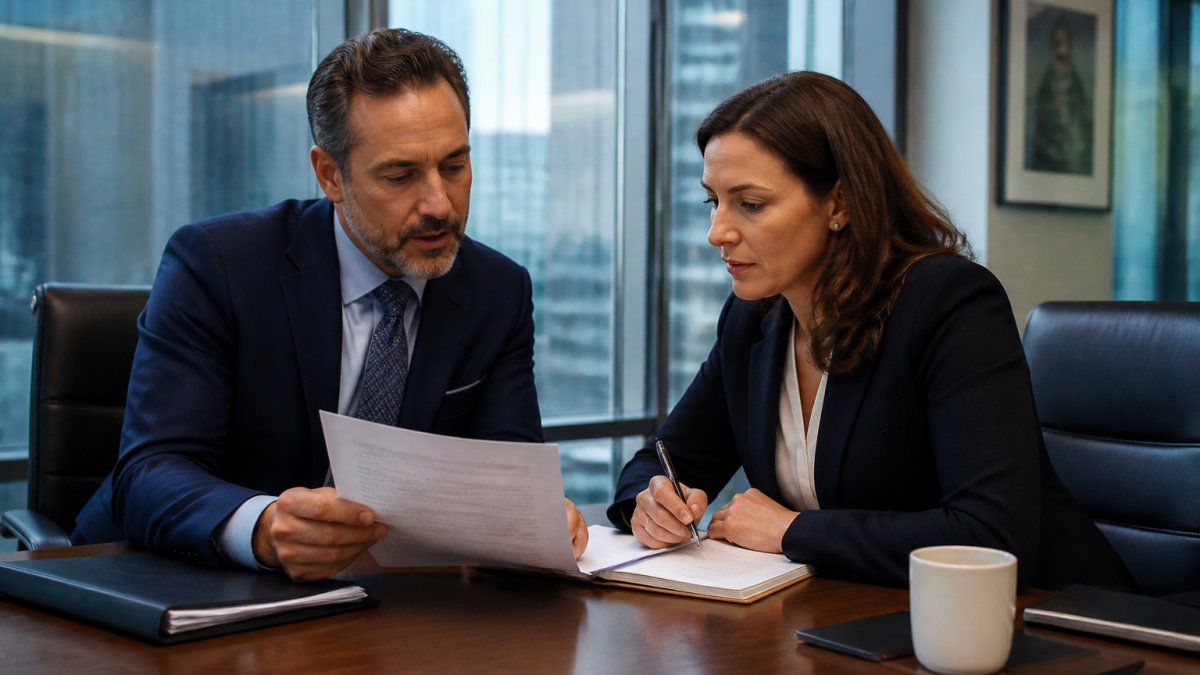
A private investigator hiring checklist keeps an emotional decision from becoming a legal liability. Corporate buyers should score every candidate against the same criteria, in writing, before awarding work.
- Verify state licensing and any required registrations for every investigator assigned
- Confirm professional credentials: CPP, CFE, or equivalent certifications
- Request two sample reports from comparable matters, redacted as needed
Private Investigator Credentials and Licensing: What to Verify
Private investigator credentials and licensing are the fastest way to separate a professional firm from a vendor with a website. Licensing is state-level, and requirements vary, so verification means checking the specific state where the work will occur.
What to verify:
Start a confidential consultation →
- Active license status in each state where investigators will operate
- Individual credentials for assigned staff, not just the firm's general claims
- Board or regulatory standing, including any disciplinary history
Special Solutions, Ltd. was founded in 1991, and our leadership serves on the Illinois Private Detective, Private Alarm, Private Security, Fingerprint Vendor and Locksmith Board. That board service is not a marketing line.
Corporate Due Diligence Investigations and Vendor Selection Criteria
Corporate due diligence investigations examine a counterparty, acquisition target, or key hire before a commitment is made. They are the highest-stakes work most corporations commission, because the findings shape a deal that may already be signed in draft.
Vendor selection criteria for due diligence should include:
- Depth of field work. Public-records research alone misses what interviews and site visits surface.
- Jurisdictional reach. Deals cross state and national lines; the firm must follow.
- Reporting standards. Findings need sourcing, not conclusions without backup.
A Global Threat Solutions alternative for corporations handling due diligence must also be able to testify if a finding is challenged. Ask directly whether the firm's investigators are prepared to provide testimony in court.
Investigation Report and Evidence Standards That Hold Up in Court
Investigation report and evidence standards determine whether the work product survives contact with opposing counsel. A report that reads well but cannot be authenticated is worthless.
What a defensible report includes:
- A clear chain of custody for every exhibit
- Source attribution for each factual finding
- Timestamped documentation of surveillance and interviews
Documented evidence compiled into reports suitable for legal proceedings is the standard corporate buyers should demand in writing, before the engagement begins. Ask what happens if the investigation cannot obtain the needed evidence. A serious firm answers that question with a defined scope review, not a shrug.
Pricing Drivers, Contracts, and Measurable Outcomes
Pricing for corporate investigative and protective work is not a rate card, it is a function of scope, risk, geography, and the credentials required. Corporate buyers who understand the drivers can compare proposals on equal footing instead of comparing headline numbers that were never comparable.
What Actually Drives Cost
- Staffing model. A single investigator on a records-and-interviews matter costs far less per day than a two-person protective detail with a advance site survey. Ask how many people are assigned and what each one does.
- Coverage hours. Eight-hour daytime coverage, 24/7 coverage, and standby coverage are three different products. Overtime, holiday, and short-notice mobilization typically carry premiums, confirm them in writing.
- Geography. Multi-state matters require licensed investigators in each state, which adds coordination and travel. International work adds passport, visa, and local-partner costs.
Contract Terms Corporate Buyers Should Negotiate
- Defined deliverables and deadlines, with a named investigator accountable for each.
- Expense caps and pre-approval thresholds for travel, equipment, and subcontractors.
- Confidentiality and conflict-of-interest clauses, including who inside the firm sees the file.
- Scope-change process with written authorization before additional hours are billed.
Measurable Outcomes and KPIs
A serious provider will accept measurable service commitments in the contract. The specific numbers depend on the assignment, but the categories should be explicit:
- Mobilization time from authorization to first field activity.
- Report delivery against agreed deadlines, with a defined format and evidence standard.
- Coverage fulfillment, the percentage of scheduled coverage hours actually staffed.
- Incident response time for monitoring and protective engagements.
How to Compare Proposals Fairly
Normalize every proposal to the same scope: same number of investigators, same coverage hours, same deliverables, same testimony expectations. Then compare total cost, not hourly rate. A lower rate with undefined scope is usually the more expensive engagement once change orders arrive. The standard any serious Global Threat Solutions alternative for corporations should meet is transparency about drivers, a written scope, and KPIs the provider is willing to be measured against.
Frequently Asked Questions
What should corporations look for in a private investigation firm?
Start with licensing and credentials: confirm the firm holds active state private investigator licenses and that leadership carries recognized certifications such as CPP or CII. Ask whether investigators can testify in court and request examples of documented, court-ready reports. Confirm the firm carries insurance, has a written confidentiality protocol, and can mobilize quickly. Finally, check whether the firm offers the full scope you need, from corporate due diligence investigations to executive protection, so you are not stitching together multiple vendors mid-matter.
How do you compare corporate investigation firms fairly?
Build a scoring sheet with weighted criteria: licensing and credentials, relevant case experience, evidence and reporting standards, turnaround time, confidentiality controls, geographic coverage, and pricing structure. Score each firm against the same criteria rather than comparing proposals narratively. Ask every firm the same five questions, including how they handle a case where evidence cannot be obtained. A side-by-side comparison of corporate security providers on paper exposes gaps that sales conversations hide, especially around report quality and court testimony experience.
How can a company verify an investigator's credentials and experience?
Check the state licensing board for active status and any disciplinary record. Ask for certification numbers for credentials like CPP (Certified Protection Professional) or CII (Certified International Investigator) and verify them with the issuing body. Request a redacted sample report and ask how many times the investigator has testified. For corporate due diligence investigations, ask specifically about financial and fraud case experience. Verify insurance coverage and ask whether the firm or its leadership sits on any regulatory boards, which signals standing in the profession.
How do corporate investigators protect confidential information?
Reputable firms use need-to-know staffing, so only the assigned team sees case details. Ask for a written confidentiality agreement, secure document handling, and a clear policy on what is shared with whom. Confirm whether reports are delivered through encrypted channels and how long records are retained. For internal fraud or espionage matters, ask how the firm avoids tipping off subjects, including whether interviews and site work are scheduled to look routine. Get the confidentiality terms in the engagement letter, not just in a verbal promise.
What are the risks of hiring a private investigator?
The main risks are inadmissible evidence, breached confidentiality, and wasted spend. Evidence gathered without proper chain of custody or in violation of state law can be excluded from proceedings, so ask how reports are documented. A firm that leaks the investigation can damage morale or alert a subject. Unclear scope leads to cost overruns, so insist on a written scope and milestone billing. Verify licensing before signing; an unlicensed investigator can compromise the case and expose the company to liability.