Table of Contents
- What Private Investigation Services for Law Firms Actually Cover
- Witness Location Services and Interviews: Finding People Who Don't Want to Be Found
- Background Investigations for Attorneys: Due Diligence Before You File
- Surveillance for Legal Cases: Documentation That Holds Up
- Court-Ready Evidence Collection and the Chain of Custody
- How to Vet a Private Investigator Before You Retain One
- Pricing, Engagement Workflow, and Ethical Limits
- Frequently Asked Questions
Last Updated: October 12, 2026
What Private Investigation Services for Law Firms Actually Cover
Private investigation services for law firms cover the fact-finding work that decides cases before they reach a courtroom.
Most attorneys don't need an investigator on every matter. They need one on the cases where a missing witness, an undisclosed asset, or an unverified claim can flip the outcome.
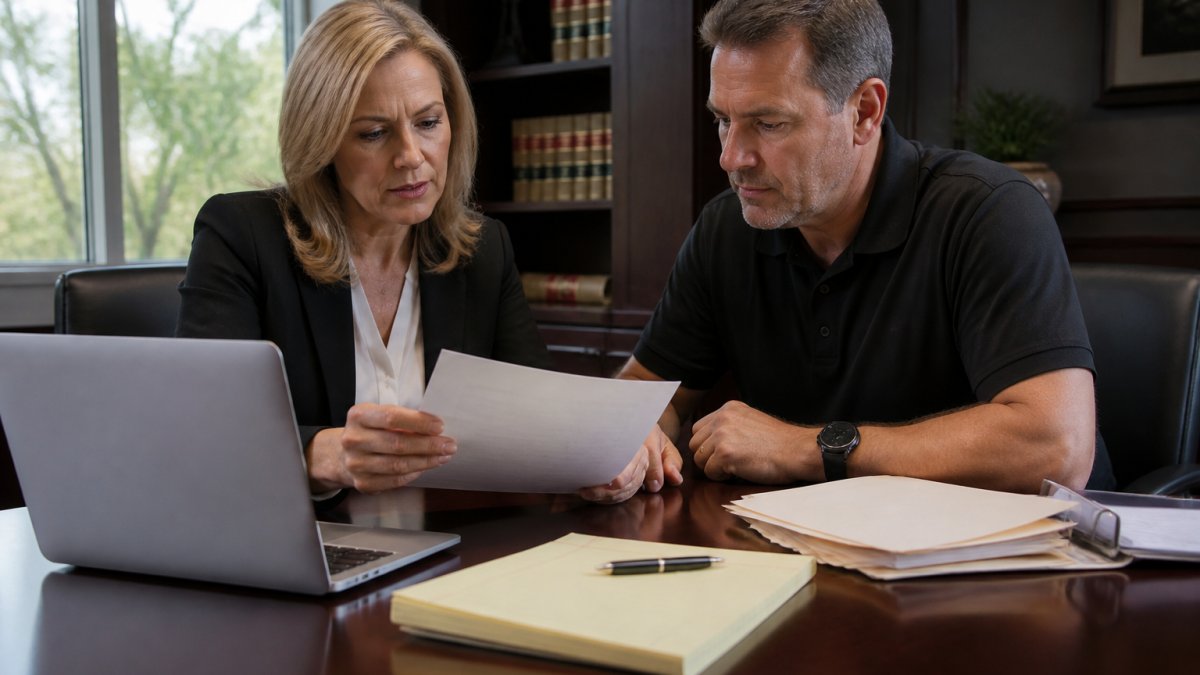
Litigation Support and Case Preparation
Litigation support is the umbrella service: investigators build the factual record your case depends on. They interview witnesses, pull public records, and compile findings into a report you can attach to a filing or hand to opposing counsel during discovery.
A common mistake is bringing an investigator in after discovery closes. The strongest case preparation happens early, when there's still time to chase a lead that goes nowhere useful or confirms something you didn't expect.
Witness Location Services and Interviews: Finding People Who Don't Want to Be Found
Witness location services trace people who have moved, changed names, or gone quiet. Investigators use skip tracing, database searches, and old-fashioned field work to find them, then conduct witness interviews that hold up under cross-examination.
The trick is documentation. An interview that isn't recorded, dated, and signed is worth little when the witness changes their story later. A licensed investigator will capture statements in a form you can authenticate.
Background Investigations for Attorneys: Due Diligence Before You File
Background investigations for attorneys answer one question: who are you actually dealing with? Before you file, you want to know about prior litigation, business ties, criminal history, and anything that undercuts a claim or exposes your client to risk.
This matters most in due diligence for corporate deals, custody disputes, and fraud cases. Public records, court filings, and property records are all fair game.
Surveillance for Legal Cases: Documentation That Holds Up
Surveillance for legal cases means capturing activity on video or in photos that supports a claim, such as a workers' compensation matter where the claimant is more mobile than reported. The footage only helps if it's time-stamped, continuous, and collected without trespassing or harassment.
| Case Type | What Surveillance Proves | Key Risk |
|---|---|---|
| Workers' compensation | Claimant activity vs. reported injury | Privacy violations |
| Family law | Custody or infidelity evidence | Illegal recording |
| Insurance fraud | Staged or exaggerated claims | Chain-of-custody gaps |
| Corporate theft | Employee misconduct patterns | Workplace policy conflicts |
Court-Ready Evidence Collection and the Chain of Custody
Court-ready evidence collection is the discipline of handling every item, photo, and recording so it can be admitted and defended. The chain of custody is the written record of who held the evidence, when, and why, from collection to courtroom.
Break that chain and opposing counsel will attack it. A missing signature or an unexplained gap in the log gives them an opening to argue tampering.
How to Vet a Private Investigator Before You Retain One
Most ranking pages tell you to "hire a licensed investigator" and stop there. That advice is useless when two candidates both hold a license and only one has testified in a proceeding like yours. Vetting is a screening process, not a checkbox, and it should happen before you share a single case document.
Step 1: Verify the license, not just its existence
Private investigator licensing is handled at the state level, and the requirements vary widely. Some states require a license to conduct investigations at all; others regulate only certain activities, such as surveillance or process service. Confirm three things:
- The license number is current and in good standing with the issuing state agency.
- The license covers the state(s) where the work will actually happen, a license in one state does not authorize field work in another.
- Any employees or subcontractors who will touch your case are covered under the firm's license or hold their own.
Ask for the license number in writing and verify it directly with the regulator. A firm that hesitates to provide it is telling you something.
Step 2: Screen for testimony and case-type experience
A background check vendor and a litigation investigator are not interchangeable. Ask:
- How many times have you been deposed or testified, and in what venues (state court, federal court, arbitration)?
- Have you worked matters in my practice area, civil litigation, family law, criminal defense, employment, insurance defense?
- Can you describe a case where your findings were challenged and how you defended them?
A useful follow-up: request a redacted sample report from a comparable matter. The report format tells you more about courtroom readiness than any sales pitch. Look for dated entries, source citations, chain-of-custody logs, and a clear separation between observed facts and investigator opinion.
Start a confidential consultation →
Step 3: Confirm insurance and confidentiality terms
Ask for a certificate of insurance showing general liability and, where applicable, errors and omissions coverage. If the investigator will conduct surveillance or enter property, confirm the policy responds to claims arising from those activities.
Confidentiality should be in the engagement letter, not a verbal promise. The terms should address:
- Who on the investigator's staff will have access to case materials.
- How materials are stored and when they are destroyed.
- Whether the investigator will sign a separate non-disclosure agreement if your firm or client requires one.
Step 4: Ask the questions that expose weak fits
These four questions separate prepared investigators from order-takers:
- "What would you do if a requested method crossed a legal line in this jurisdiction?" A good answer describes declining the task and proposing a lawful alternative, not "we'll figure it out."
- "How do you document chain of custody from the field to my office?" You want a described process, not a promise.
- "What is your policy on recording interviews, and how do you handle a witness who won't sign a statement?"
- "If the lead goes nowhere, what do I receive and what do I pay?" The answer should be in the engagement letter.
Step 5: Put scope and deliverables in writing
Before work starts, the engagement letter should define the assignment, the deliverables, the reporting cadence, the fee structure, and the expense-approval threshold. If a firm won't commit to a written scope, treat that as a disqualifier.
Pricing, Engagement Workflow, and Ethical Limits
This is the section most competitor pages skip, because pricing and workflow are where vague marketing language usually lives. Attorneys need the opposite: a clear picture of how investigations are scoped, billed, and delivered, plus the ethical boundaries that protect the firm.
How legal investigations are priced
Most investigative firms bill using one or a combination of these structures:
| Structure | How it works | Best for |
|---|---|---|
| Hourly plus expenses | Time is billed at an agreed rate; expenses (mileage, database fees, records fees) are passed through | Open-ended matters where scope is uncertain |
| Flat fee per task | A fixed price for a defined deliverable, such as a background report or a records pull | Discrete, repeatable tasks |
| Retainer against hourly | Client funds a retainer; hours draw down against it; unused funds are typically refundable per the agreement | Ongoing litigation support |
| Contingency or success-based | Payment tied to a result, such as asset recovery | Rare in legal support; often restricted or prohibited by state licensing rules |
Two cost drivers matter more than the rate itself. First, scope creep: a "locate the witness" assignment that becomes a multi-state surveillance operation will blow past any estimate.
Ask for a written estimate tied to a defined scope, and ask what triggers a re-estimate. A firm that will not put a scope in writing is a firm that will surprise your budget.
The engagement workflow, stage by stage
A well-run engagement follows a predictable arc:
- Consultation. You describe the matter and the factual question. The investigator tells you what is and is not feasible, and flags any legal limits up front.
- Scoping and engagement letter. The assignment, deliverables, fee structure, expense threshold, and confidentiality terms are documented and signed.
- Case assessment. The investigator reviews the materials you provide, identifies leads, and proposes an investigative plan with estimated hours.
- Field work and records research. Interviews, surveillance, database searches, and public-records pulls are conducted and logged as they happen.
- Interim reporting. Depending on the scope, you receive updates at agreed intervals, not a single report at the end. Interim updates let you redirect the investigation before hours are wasted.
- Final report and testimony support. The investigator delivers a documented report with exhibits, chain-of-custody logs, and a declaration or affidavit if needed, and remains available for deposition or trial testimony.
Secure handling of case materials should be part of the workflow, not an afterthought. Ask how documents are transmitted (encrypted email, secure portal), who has access, and how long materials are retained.
Ethical and legal limits that protect your firm
Investigators operate under state licensing laws, privacy statutes, and the same professional-conduct expectations that bind attorneys who direct them. The boundaries that matter most:
- Trespass. Surveillance from a place the investigator has no right to be can render evidence inadmissible and expose the firm to civil liability.
- Recording laws. Some states require all-party consent to record conversations; others require only one-party consent. Recording across state lines can trigger the stricter rule.
- Impersonation. Investigators may not impersonate law enforcement officers. Pretexting is regulated differently depending on the state and the context, and some methods are off-limits entirely.
Frequently Asked Questions
What services can a private investigator provide to a law firm?
A licensed investigator can handle witness location, background checks, surveillance, asset searches, records research, and evidence documentation. For law firms, the work usually centers on litigation support: finding and interviewing witnesses, verifying a party's claims, and compiling findings into a report your team can use in discovery or at trial. Many firms also retain investigators for family law matters, insurance defense, and corporate disputes where in-house staff cannot cover the field work.
How do you know if the evidence a private investigator gathers will hold up in court?
Ask about documentation practices before you retain anyone. Court-ready evidence collection means maintaining a clear chain of custody, timestamped logs, original media files, and a written investigative report. A credible investigator will also be prepared to testify about their methods and findings. Confirm whether the person who did the field work is the same person who will take the stand, since that continuity matters to judges and opposing counsel.
What should attorneys look for when choosing a private investigator?
Check licensing first. Most states require private investigators to hold a current license, and some require additional credentials for surveillance or protection work. Then ask about courtroom experience, familiarity with your case type, and how they handle confidential matters. Request a sample report format so you know what the deliverable looks like. A short consultation before you sign anything will reveal whether the investigator understands your legal strategy or just takes generic assignments.
How much do private investigation services for law firms cost?
Pricing depends on the scope of work, the number of investigators needed, travel, and how long the assignment runs. Surveillance and witness location typically bill hourly plus expenses, while records research may be quoted per project. Ask for a written estimate with a breakdown of hourly rates, retainer terms, and expense policies. Request a quote directly from the firm you are considering so you can compare apples to apples.
When a case turns on a missing witness or evidence that has to survive a challenge, the investigator you choose decides the outcome. Special Solutions, Ltd. brings over three decades of experience, court-tested documentation, and a confidential consultation process built for sensitive legal matters. Get started with Special Solutions, Ltd. and secure evidence you can take to court.