Table of Contents
- What Private Investigator Testimony in Custody Hearings Can Prove
- How a Private Investigator Child Custody Evidence File Is Built
- What a Private Investigator Report for Court Should Contain
- Private Investigator Court Testimony Preparation: A Step-by-Step Process
- Child Custody Investigation Examples That Hold Up in Family Court
- Privacy, Consent, and the Legal Limits of Custody Investigations
- Conclusion
- Frequently Asked Questions
Last Updated: October 21, 2026
What Private Investigator Testimony in Custody Hearings Can Prove
Private investigator testimony in custody hearings translates field observations into sworn evidence a judge can weigh. A licensed investigator testifies to what they personally saw, documented, and recorded, giving the court a factual record parents' own accounts cannot.
Judges decide custody on the best interests of the child, a standard that rewards specifics over accusations.
This guide from Special Solutions, Ltd. covers how a custody investigation is built, what a court-ready report contains, how testimony preparation works, and where the legal limits sit.
How a Private Investigator Child Custody Evidence File Is Built
A private investigator child custody evidence file is built through observation, documentation, and corroboration, assembled so each finding survives scrutiny in family court.
Most investigations begin with a scoping conversation with the family lawyer or client: what behaviors are alleged, what dates matter, and what the court has already been told. The investigator then designs a plan that stays inside legal limits.
Observation of Parenting Practices and Child Care
Observation focuses on how a parent actually cares for the child: school and daycare pickups, supervision levels, bedtime routines, and who else is present in the home. Investigators document times, locations, and conditions in real time, because contemporaneous notes hold up under cross-examination. A parent who consistently arrives late, leaves a child with an unvetted adult, or appears impaired during handoffs creates a documented pattern.
Surveillance, Documentation, and Witness Statements
Surveillance captures conduct in public view: a parent's driving, companions, and behavior at exchanges. Documentation means dated logs, timestamped photographs, and video with clear chain-of-custody records. Witness statements from neighbors, teachers, or coaches who observed the same conduct independently turn a single investigator's account into evidence a judge can weigh against two sources.
What a Private Investigator Report for Court Should Contain
A private investigator report for court should contain a factual narrative, a dated activity log, an evidence index, and the investigator's credentials, written so a judge can follow it without the investigator present. Reports that editorialize ("the mother is clearly negligent") weaken the case. Reports that state observations plainly ("on March 4, the child was left in a running vehicle unattended for 11 minutes") give the family-law attorney clean material.
A strong report typically includes:
- Scope and authorization: who retained the investigator and what was assigned
- Methodology: observation dates, hours, and techniques used
- Chronological findings: dated entries tied to specific times and locations
Private Investigator Court Testimony Preparation: A Step-by-Step Process
Private investigator court testimony preparation turns a case file into credible sworn testimony. It starts well before the hearing and follows a repeatable sequence.
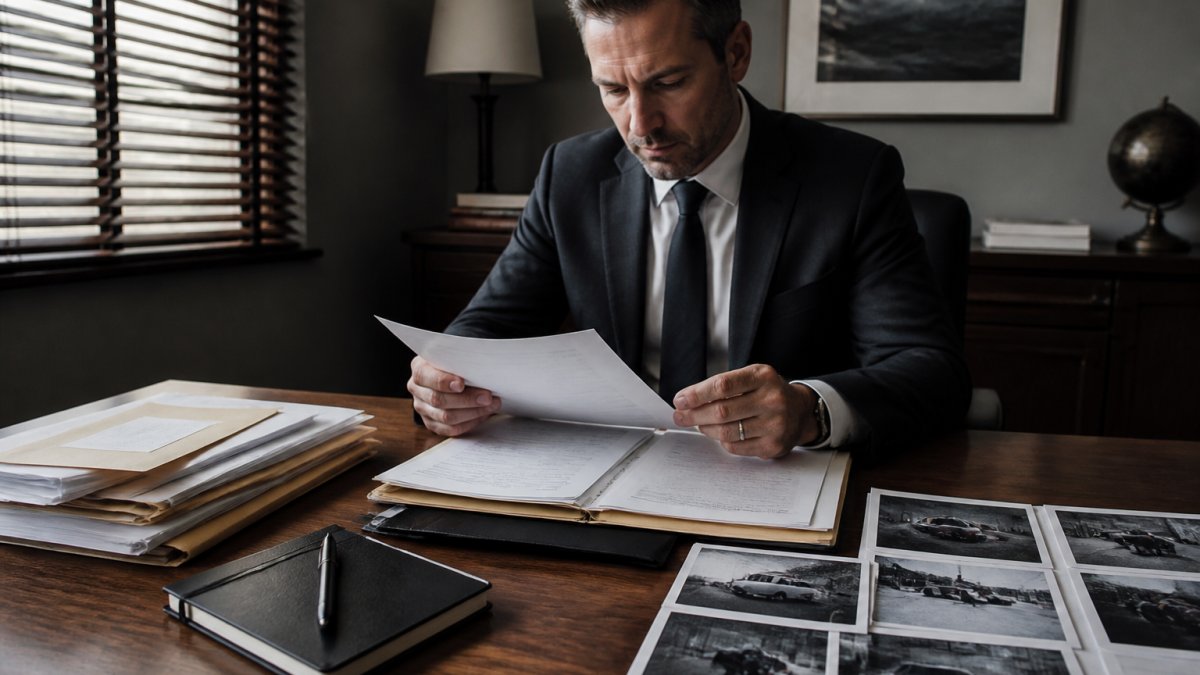
- Review the full file. Re-read every log entry, photograph, and report. Testimony must match the documentation exactly. If a note says 4:12 p.m., do not say "around four."
- Reconstruct the timeline. Build a dated chronology so any question about a specific day can be answered precisely. A one-page index keyed to exhibit numbers signals command of the file.
- Confirm evidence integrity. Verify chain-of-custody records and original file metadata. Bring the original device or storage media when the court requires it, and confirm the copies match.
- Meet with counsel. Walk through likely questions, the scope of direct examination, and the boundaries of what the investigator can and cannot say. Confirm whether counsel will offer the investigator as a fact witness, an expert, or both.
- Prepare for cross-examination. Anticipate challenges to method, bias, and credentials. Rehearse the two or three weakest points in the file so they are answered, not avoided.
- Rehearse concise answers. Short, direct responses read as credible. Rambling invites doubt. "Yes," "No," and "I don't recall" are complete answers when true.
Qualifying the Investigator as a Fact or Expert Witness
A fact witness testifies only to what they personally observed: what they saw, heard, and recorded. An expert witness may offer opinions based on training and experience, such as interpreting behavior patterns or explaining surveillance methods.
Qualifying as an expert requires establishing credentials, licensing, and relevant experience on the record through foundational questions covering:
- Training and licensing: state license number, required continuing education, and any specialized coursework in family-law investigations.
- Experience: years in the field, number of custody-related engagements, and familiarity with the specific behaviors at issue.
- Prior testimony: courts where the investigator has testified, whether as a fact or expert witness, and whether any testimony was excluded.
Counsel often qualifies the investigator as an expert only on narrow issues, surveillance methodology or interpretation of time-stamped logs, rather than on parental fitness.
Preparing for Cross-Examination
Cross-examination tests consistency, method, and motive. Opposing counsel will probe whether the investigator was hired to reach a predetermined conclusion, whether notes were contemporaneous, and whether any finding was taken out of context. Expect questions on:
Start a confidential consultation →
- Bias and motive: Who retained you? What were you asked to find? How much of your fee depends on producing favorable findings?
- Method: How many hours did you actually observe? What was your vantage point? Did you use any aids, and were they disclosed?
- Contemporaneous notes: Were notes written at the scene or reconstructed later? Where are the originals?
The best defense is a file that answers those questions before they are asked. An investigator who can point to a dated entry for every claim, and who acknowledges the limits of what they observed, holds up far better than one who overstates. If a subpoena or notice to appear is served, confirm the date, the documents requested, and whether the original file or a certified copy must be produced, then coordinate with counsel on which exhibits will be offered and in what order.
Child Custody Investigation Examples That Hold Up in Family Court
Child custody investigation examples that hold up share one trait: they document observable conduct over time and corroborate it. In one case, an investigator logged repeated late daycare pickups across several weeks, each entry time-stamped and matched to sign-out records; the pattern, not any single incident, supported the argument.
Contrast those with investigations built on a single surveillance clip with no context, which is easy to explain away. The cases that persuade are the ones where documentation, observation, and witness statements point the same direction.
Privacy, Consent, and the Legal Limits of Custody Investigations
Privacy and consent set the outer boundary of any custody investigation. Investigators may observe and record conduct in public view, but they cannot trespass, intercept private communications, or install tracking devices in ways that violate state and federal law. Rules vary by state, so the legal guidance on wiretap and surveillance law and state statutes matter before any recording begins.
Methods That Create Legal Exposure
The fastest way to lose a custody case is to hand opposing counsel a lawful-methods objection. These categories account for most of the risk:
- Recording consent. Some states require all parties to consent to a recording of a conversation; others require only one party's consent. Recording a private conversation without the required consent can violate state wiretap law and render the recording inadmissible, or worse, expose the hiring parent to a civil claim. Public-area video without audio is generally treated differently from audio recording of a private conversation, but the line depends on the state.
- Trespass and curtilage. Observing from a public street is one thing; entering private property, peering into windows, or using a ladder to see over a fence is another. The area immediately around a home receives heightened protection, and an investigator who crosses that line can taint everything gathered that day.
- Tracking devices. Placing a GPS tracker on a vehicle the investigator does not own or lawfully control raises trespass and privacy concerns, and several states have specific statutes addressing electronic tracking. A tracker placed by a parent on a vehicle the parent owns is a different question from one placed by an investigator on the other parent's car.
Jurisdiction-Specific Evidence Rules: A Verification Checklist
Admissibility, recording, surveillance, and licensing rules vary by state, and a method lawful in one jurisdiction may be excluded in another. Before any technique is used, verify the following with counsel:
- Licensing: Is the investigator licensed in the state where the work will occur, and does the license cover custody or domestic matters?
- Recording consent: Does the state require one-party or all-party consent for audio, and how does it treat video with audio captured incidentally?
- Surveillance and tracking: Are there state statutes specifically addressing GPS trackers, drones, or electronic monitoring?
- Privacy statutes: Does the state recognize a specific privacy tort or criminal statute that could apply to observation of the home?
- Evidence rules: What foundation is required to authenticate photographs, video, and logs, and does the state follow a business-records or chain-of-custody framework?
- Reporting obligations: Does the state require the investigator to preserve notes or produce them on request, and what is the retention period?
- Court-specific requirements: Does the family court have local rules on exhibit format, pretrial disclosure, or expert designation deadlines?
A written scope naming the permitted techniques and jurisdictions is the practitioner's safeguard. Ethical investigation means staying inside those lines even when a shortcut would produce a dramatic result. A judge who learns evidence was obtained improperly may discount the entire investigation, undermining everything else in the file.
Conclusion
Building testimony that survives a custody hearing takes disciplined documentation, honest reporting, and preparation that anticipates every challenge. Special Solutions, Ltd. has assembled court-ready evidence for legal and personal matters since 1991, with investigators prepared to provide testimony and leadership that serves on the Illinois Private Detective, Private Alarm, Private Security, Fingerprint Vendor and Locksmith Board. Our documented evidence is compiled into reports suitable for legal proceedings, and every engagement begins with a confidential consultation.
Frequently Asked Questions
Can a private investigator testify in a child custody hearing?
Yes. A licensed private investigator can testify in a custody hearing as a fact witness about what they personally observed, documented, or recorded during the investigation, such as parenting behavior, child care arrangements, or home conditions. In some cases, an investigator with the right credentials may also be qualified as an expert witness. Admissibility still depends on the rules of the specific court, so the family-law attorney should confirm the scope of testimony in advance and make sure the investigator's private investigator testimony is tied to documented evidence.
What can a private investigator testify about in a custody case?
An investigator typically testifies about direct observations and documented facts: drop-off and pick-up routines, who was supervising the children, visible safety concerns, and statements made by witnesses. They can also explain how the private investigator child custody evidence was collected and preserved. They cannot offer opinions about which parent should win custody, and they should not repeat hearsay. The judge relies on the investigator's factual account, combined with the private investigator report for court, to weigh parental fitness and the best interests of the child.
Will a judge accept evidence collected by a private investigator?
Judges accept investigator evidence when it is reliable, lawfully obtained, and properly documented. A clean chain of custody, time-stamped photos or video, and a detailed investigator report for court all strengthen the evidentiary foundation. Evidence gathered through trespass, illegal recording, or other unlawful means can be excluded and may create liability. Because evidence rules vary by jurisdiction, the family lawyer should review every item before it is offered. The investigator's court testimony should then walk the judge through exactly how each piece of evidence was collected.
How should a private investigator prepare to testify in court?
Preparation starts with a thorough review of the case file, field notes, and the private investigator report for court. The investigator should meet with the attorney to understand the questions, rehearse clear and consistent answers, and prepare for cross-examination on methods, timing, and any gaps in the record. Bringing original notes and exhibits helps. Private investigator court testimony preparation also means knowing the limits of what can be said, avoiding speculation, and being ready to explain the investigative process in plain language the judge can follow.
Can a private investigator record a parent without their knowledge?
It depends on state law. Some states allow one-party consent recording, meaning the investigator can record a conversation they are part of; others require all parties to consent. Video recording in public places is generally permitted, but recording inside a private home or in places with a reasonable expectation of privacy raises serious legal limits. An investigator who ignores these rules risks having the evidence excluded and facing civil or criminal exposure. Confirm the applicable state rules with counsel before any recording is made.
Can hiring a private investigator hurt a custody case?
It can if the investigation is conducted poorly. Aggressive surveillance that harasses the other parent, unlawful recording, or evidence that is thrown out can damage credibility before the judge and waste money. A custody investigation should be scoped with the family lawyer, focused on documented facts, and carried out by a licensed investigator who understands legal limits. When the work is ethical and the private investigator testimony is clear and consistent, the evidence usually helps the court's assessment of parental fitness and child safety rather than hurting it.