Table of Contents
- What a Subrosa Alternative Must Deliver for Legal Evidence
- Legal Evidence Collection Services: What to Compare Feature by Feature
- Evidence Documentation and Chain of Custody: The Admissibility Test
- How to Evaluate a Firm for Court-Ready Evidence: A 7-Step Process
- Private Investigator Hiring Questions: 12 to Ask Before You Switch
- Security, Confidentiality, and Retention Controls
- Conclusion: Start a Confidential Consultation
- Frequently Asked Questions
Last Updated: October 12, 2026
What a Subrosa Alternative Must Deliver for Legal Evidence
A Subrosa alternative for legal evidence is any investigative service that gathers, documents, and preserves proof strong enough to survive a courtroom challenge. If your evidence gets thrown out, you paid for nothing.
At Special Solutions, Ltd., we have handled sensitive investigations since 1991, building cases that hold up under scrutiny. This guide covers what to compare before you switch providers.
Why Legal Teams Look Beyond Subrosa
Firms switch when evidence quality becomes a liability. A report full of gaps creates problems in discovery. A weak chain of custody gives opposing counsel an easy win.
Cost is rarely the real driver, admissibility is. Budget-friendly investigations often cost more later, since a motion to exclude evidence can sink a case.
The Five Criteria That Decide the Switch
Five factors separate a real Subrosa alternative from a cheaper copy:
- Admissibility record - Does the evidence survive motions to exclude?
- Documentation depth - Are reports built for litigation, not just clients?
- Testimony readiness - Will the investigator take the stand?
Judge every firm on these five. Everything else is secondary.
Legal Evidence Collection Services: What to Compare Feature by Feature
Legal evidence collection services cover the full path from gathering proof to presenting it in court. Every provider claims the same capabilities, so compare on the dimensions that change outcomes: evidence capture, monitoring, reporting, collaboration, integrations, security, export, and total cost of ownership.
Discovery Support: Subpoenas, Document Production, and Depositions
Discovery is where cases are won or lost. A subpoena duces tecum compels records. Document production follows strict procedural rules. A missed deadline creates discovery delays that hurt your client.
Strong providers support:
- Subpoena service and response tracking
- Document review and production support
- Deposition transcript review and summary
The Federal Rules of Civil Procedure set the baseline for discovery conduct in federal cases. State civil procedure rules often mirror them.
AI-Assisted Document Review and Automated Extraction
AI-assisted analysis speeds up document review. Automated extraction pulls key facts from testimony and financial records. But speed means nothing without accuracy.
Ask how a firm verifies AI output. Human review should confirm every extracted fact. An audit trail should show who checked what, and when.
| Evaluation Factor | Weak Provider | Strong Provider |
|---|---|---|
| Document review | Manual only, slow | AI-assisted plus human check |
| Key facts extraction | Unverified | Verified with audit trail |
| Deposition analysis | Summary only | Summary plus source citations |
| Turnaround | Weeks | Days |
The Eight-Point Comparison Grid for Subrosa Alternatives
Use this grid to score candidates side by side and see which is a real replacement versus a rebranded version of what you already have.
| Dimension | What to Ask | Why It Matters |
|---|---|---|
| Evidence capture | What devices, formats, and field methods are used? Are photos, video, audio, and digital artifacts captured with timestamps and geolocation? | Capture quality determines whether the evidence is usable at all. |
| Monitoring | Is there ongoing surveillance, alerting, or case-status tracking? How often are updates delivered? | Long-tail investigations fail when nobody is watching between milestones. |
| Reporting | Are reports litigation-grade with source citations, or client-friendly summaries? | A summary that cannot be traced back to a source will not survive a deposition. |
| Collaboration | Can multiple attorneys, paralegals, and outside counsel work in the same case file with role-based permissions? | Shared access without access control is how privileged material leaks. |
| Integrations | Does it connect to e-discovery platforms, document management systems, or case management software your firm already uses? | Manual re-entry is where errors and delays accumulate. |
| Security | Encryption at rest and in transit, multi-factor authentication, access logging? | Sensitive case material is a target; weak controls create liability. |
| Export | Can you export in formats courts and opposing counsel accept, PDF/A, native files, load files, Bates-numbered sets? | Export friction becomes a discovery dispute. |
| Total cost of ownership | Hourly, retainer, per-matter, or subscription? What triggers overages? | The cheapest quote is rarely the cheapest engagement. |
Pricing Models and Total Cost of Ownership
Most investigative firms price one of four ways: hourly, retainer, per-matter flat fee, or subscription. Each shifts risk differently.
- Hourly rewards long engagements and punishes scope creep. Ask for a written estimate range and a change-order process.
- Retainer works when the matter is predictable. Ask what happens when the retainer is exhausted mid-investigation.
- Per-matter flat fee aligns incentives but only if the scope is tightly defined in writing.
Total cost of ownership includes internal review hours, re-work when a report fails a deposition challenge, and the cost of a motion to exclude. A provider that charges more upfront but produces unchallenged evidence is usually cheaper across the life of the matter.
Use Cases Beyond Deposition Summaries
The query is about legal evidence, not just transcripts. A real Subrosa alternative should handle:
- Investigations, fraud, workers' compensation, internal theft, and due diligence.
- Surveillance, field observation with documented logs and time-stamped media.
- Digital evidence, social media, device forensics, and open-source intelligence, captured with provenance.
If a provider only does deposition summaries, it is not a Subrosa alternative, it is a niche tool.
Evidence Documentation and Chain of Custody: The Admissibility Test
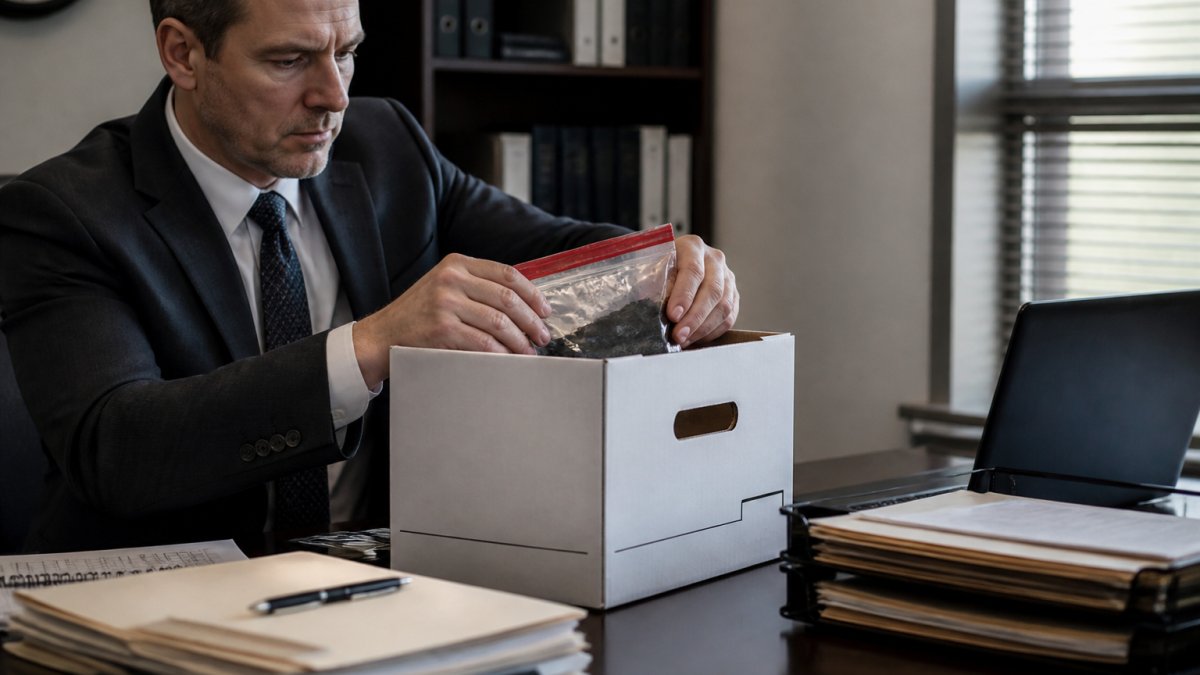
Evidence documentation and chain of custody decide whether proof reaches the courtroom. Every handoff, seal, and log entry must be recorded, one gap can end a case.
Authentication and Introduction of Evidence Under the Rules
Authentication proves that evidence is what you claim it is. The Federal Rules of Evidence, Article IX govern authentication and the introduction of evidence in federal court. Rule 901(b) lists the methods courts accept, including testimony of a witness with knowledge and comparison by expert or trier of fact.
A clean chain of custody does most of this work. It shows:
- Who collected the item
- When and where it was collected
- Who held it at each step
Provenance, Metadata, and Hash Values
Digital evidence adds a layer paper files never had: provenance, the verifiable record of where a file came from, who touched it, and whether it changed.
Three mechanisms do the heavy lifting:
Start a confidential consultation →
- Metadata preservation, original file timestamps, device identifiers, geolocation, and author fields must be captured at the moment of collection, not reconstructed later. Stripping metadata during export is one of the most common ways evidence becomes challengeable.
- Hash values, a cryptographic hash (SHA-256 is the common standard) acts as a digital fingerprint. If the hash of the file you produce matches the hash recorded at collection, you can show the file has not been altered. If it does not match, opposing counsel will notice.
- Write-once storage, evidence should be copied to media that cannot be modified in place, with the original preserved. Working copies are fine; the original must remain pristine.
Ask any provider how they capture and preserve these three. A firm that cannot answer in specifics is not ready for a contested matter.
Retention, Access Controls, and Audit Logs
Chain of custody continues past collection through storage, review, and production.
- Access controls, role-based permissions so only authorized personnel can view, copy, or export case files. Every access should be logged with user, timestamp, and action.
- Encryption, at rest and in transit. Sensitive financial records and privileged communications should never sit in unencrypted storage.
- Retention schedules, written policies stating how long evidence is kept, in what format, and how it is destroyed. Spoliation, losing or destroying evidence you had a duty to preserve, can trigger sanctions under the Federal Rules of Civil Procedure.
What Cannot Be Used as Evidence
Some evidence never makes it in. Illegal recordings, hacked data, and items with broken custody chains get excluded. A motion to exclude can erase weeks of work.
Common exclusion triggers:
- Recordings made in violation of state wiretap or two-party consent laws
- Data obtained without lawful authority
- Files whose hash values do not match the collection record
The Courtroom-Readiness Checklist
Before you accept any evidence package from a Subrosa alternative, confirm:
- Original media preserved and sealed
- Hash values recorded at collection and re-verified at production
- Metadata intact on every digital file
- Custody log with no gaps, signed at each transfer
- Access log showing who viewed or exported each item
- Written retention and destruction policy
- Investigator available to testify to the process
If any line is blank, the evidence is not court-ready.
How to Evaluate a Firm for Court-Ready Evidence: A 7-Step Process
Court-ready evidence comes from firms with a repeatable process. Screen any provider with these seven steps before you sign.
- Check licensing. Confirm the firm holds a valid private investigator license.
- Ask about testimony. Find out how often investigators have testified in court.
- Review sample reports. Look for litigation-grade documentation, not client summaries.
- Test confidentiality. Ask how they protect case details from leaks.
- Confirm custody procedures. Require a written chain of custody process.
- Set a timeline. Agree on mobilization speed and delivery dates.
- Verify insurance and compliance. Check coverage and data handling rules.
Selection Criteria by Firm Size and Workflow
Smaller firms need flexible pricing and quick starts. Larger legal teams need volume capacity and audit trails. Match the provider to your actual caseload.
Ask directly: do you work with businesses our size? A firm that only serves large corporate clients may not fit a small practice.
Private Investigator Hiring Questions: 12 to Ask Before You Switch
Private investigator hiring questions reveal whether a firm can deliver. Ask all twelve before switching providers.
- How many times have your investigators testified?
- What is your chain of custody process?
- How do you keep investigations confidential?
- What happens if you cannot get the evidence we need?
- How fast can you mobilize a team?
- Do you work with firms our size?
- Can you walk us through your pricing?
- Who reviews AI-assisted document analysis?
- How do you handle a motion to quash?
- What does your reporting look like?
- How do you protect sensitive financial records?
- Can you provide expert witness support?
Security, Confidentiality, and Retention Controls
Confidentiality protects the case and the client. A leak can tip off a fraud suspect or damage morale inside a company. Ask how a firm stores, shares, and destroys case files.
Look for:
- Restricted access to case files
- Encrypted storage and transfer
- Written retention and destruction policies
At Special Solutions, Ltd., our investigators are prepared to provide testimony in court. We compile documented evidence into reports suitable for legal proceedings. Our leadership serves on the Illinois Private Detective, Private Alarm, Private Security, Fingerprint Vendor and Locksmith Board.
Conclusion: Start a Confidential Consultation
Switching providers is a risk; bad evidence is a bigger one. The right Subrosa alternative protects your case from discovery to the final ruling.
Special Solutions, Ltd. brings over three decades of experience, court-ready documentation, and investigators ready to testify, handling sensitive matters with discretion and precision.
Get started with Special Solutions, Ltd. and build a case that holds up in court.
Frequently Asked Questions
Can a private investigator collect evidence for a lawsuit, and what makes a Subrosa alternative a better fit?
Yes, private investigators can gather evidence for civil and criminal matters, provided they follow state law and avoid trespass, illegal recording, or harassment. A Subrosa alternative for legal evidence should match that standard while adding documented chain of custody, tamper-evident handling, and reports formatted for introduction of evidence. Ask any candidate firm for sample reports, retention policies, and how they handle authentication so your attorney can admit the evidence without procedural challenges.
What should attorneys look for in a legal evidence provider?
Start with five items: licensing, documented chain of custody, willingness to testify, security controls, and clear deliverables. Verify the firm's investigators are licensed in the state where the work happens, ask how they preserve and label evidence, and confirm they can produce a witness who has testified before. For document-heavy matters, ask how they handle subpoena duces tecum responses, document production, and deposition transcript review. Pricing depends on scope, dates, and deliverables, so request a written estimate before work begins.
How should investigators document evidence and maintain chain of custody for court?
Every item should be logged with date, time, location, collector name, and a unique identifier, then stored in a sealed, labeled container. Transfers between people require signatures, and digital files need hash values plus access logs. This record lets counsel authenticate evidence under the Federal Rules of Evidence and survive challenges to admissibility. Missing links in the log are the most common reason evidence gets excluded, so ask any firm to show a sample custody log before you hire them.
What questions should you ask before hiring a private investigator in 2026?
Ask about licensing, testimony history, confidentiality controls, retention and destruction policies, and how they handle a case that stops producing usable evidence. Request references from attorneys who used them in litigation, not just general clients. Confirm who supervises the file, how quickly they can mobilize, and what the deliverables look like. A firm that answers these plainly, in writing, is usually the one that will hold up when the case goes to a hearing.
This article is for general information only and is not legal advice. Consult a licensed attorney in your jurisdiction about the rules that apply to your case.