Last Updated: October 25, 2026
Quick Summary
Finding credible expert witnesses means searching professional directories, targeted search engines, and professional networks, then verifying every claim before you engage. Confirm licenses through the issuing board, check prior testimony and deposition transcripts, and contact attorney references directly. A scored interview rubric and a written engagement letter protect you from persuasive but thin candidates.
- Start your expert search early, because the best experts are booked months out.
- Match the expert's specialty to the specific case issues, not the general industry.
- Score candidates on a 1-to-5 rubric across six dimensions, totaling out of 30.
- Set a minimum score, such as 22 out of 30, before you begin interviewing.
- Get hourly rates, retainer, and cancellation terms in a written engagement letter.
Table of Contents
- Where to Begin Your Expert Witness Search
- Expert Witness Qualifications That Actually Matter
- How to Vet an Expert Witness Before You Engage
- Expert Witness Interview Questions to Ask Every Candidate
- Conflicts of Interest, Litigation History, and Bias Risks
- Admissibility Standards and Jurisdiction-Specific Rules
- Expert Witness Testimony Preparation and Fees
- Start a Confidential Consultation With Special Solutions, Ltd.
- Frequently Asked Questions
Where to Begin Your Expert Witness Search
Finding credible expert witnesses starts before litigation heats up. The strongest candidates come from a deliberate search across three channels: professional directories, targeted search engines, and professional networks. At Special Solutions, Ltd., we treat the search as evidence work.
Start early. The best experts are booked months out, and a rushed search pushes you toward whoever is available rather than whoever is right.
Directories, Search Engines, and Professional Networks
An expert witness directory is a searchable database of professionals who offer testimony.
Search engines work better for niche fields. Combine the specialty with the case issue, "forensic accountant construction defects" or "metallurgist weld failure", then check the results.
Professional networks often produce the best candidates. Ask litigators who have tried similar cases, check bar association resources, and see who has testified in related matters.
- Search two or three directories by specialty
- Run keyword searches pairing the field with the case issue
- Ask two or three litigators for names
Searching by Specialty, Name, or Location
Specialty search is the default. Match the expert's field to the specific case issues, not the general industry.
Name search matters when you already have a candidate. Use it to check credentials, publications, and prior testimony, it often reveals gaps a directory profile hides.
Location search is the weakest filter. Geography matters for site inspections and courtroom logistics, but never override an expertise match.
Expert Witness Qualifications That Actually Matter
Credentials are the floor, not the ceiling. A license, degree, and board certification prove the expert cleared basic hurdles, not that they can explain a complex issue to a jury under pressure.
What matters most is current practice. An expert who stopped working in the field a decade ago may hold impressive credentials and still be a weak witness.
Look for:
- Relevant qualifications tied to the case issues
- Professional experience in the specific subject matter
- Current practice in the field, not just a past career
A common mistake is hiring the most decorated expert rather than the best-matched one. Credentials impress on paper. Fit wins in the courtroom.
How to Vet an Expert Witness Before You Engage
How to vet an expert witness comes down to verification, not conversation.
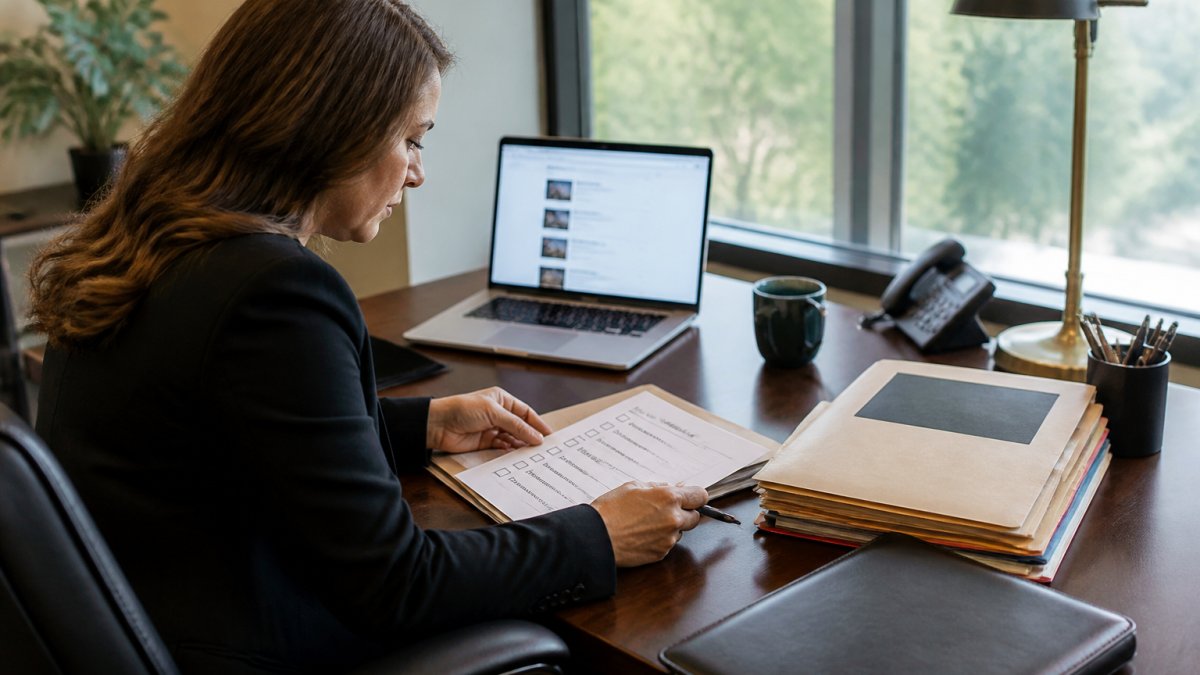
Pull the expert's publications and read the ones closest to your case.
This is where most searches go wrong: teams interview a persuasive candidate, skip verification, and a deposition later exposes the gap.
Watch out: an expert who cannot produce prior testimony or references is a risk, not a hidden gem.
The Credibility-Verification Checklist
Use this checklist before you engage any candidate. Score each item pass or fail, and do not engage until every line passes.
- License or certification confirmed through the issuing board
- Relevant qualifications match the specific case issues
- Current practice in the field verified, not just historical
Expert Witness Interview Questions to Ask Every Candidate
Expert witness interview questions should test judgment, not just knowledge. Most teams run an unstructured conversation and cannot explain why Candidate A beat Candidate B. A repeatable screen fixes that: same questions, same order, scored against defined criteria, compared on paper before you check references.
The Screening Call Structure
Block 45 to 60 minutes and split it into four parts:
- Case fit (10 minutes): confirm the candidate understands the specific issues, not the general field.
- Experience and testimony record (15 minutes): probe prior testimony, deposition frequency, and outcomes.
- Communication under pressure (15 minutes): test how the candidate explains a technical point and handles a challenge.
- Logistics and terms (10 minutes): availability, rates, retainer, and conflicts.
Core Questions and What a Strong Answer Sounds Like
Ask every candidate these questions, and score each answer 1 (weak) to 5 (strong).
- "Walk me through how your background applies to these specific case issues." Strong answers name the exact issue, the method they would use, and a comparable matter. Weak answers recite a CV.
- "How many times have you testified on this issue, in deposition and at trial?" Strong answers give separate counts and name the courts or venues. Vague answers ("many times") are a flag.
- "Explain [core technical concept] to me as if I were a juror with no background." Strong answers use plain language, an analogy, and a clear bottom line. Watch for jargon and hedging.
- "What would you do if the evidence did not support the side that retained you?" Strong answers describe telling the retaining attorney early and adjusting the opinion. An answer that assumes the conclusion is a bias risk.
- "Tell me about a time you were cross-examined on a point you were unsure about. What happened?" Strong answers describe conceding the limit and recovering. Defensiveness is a warning sign.
- "What is your availability for deposition and trial over the next six months?" Strong answers give specific windows and disclose other engagements. "Whenever you need me" usually means the expert is not in demand.
- "How do you set and document fees, and what happens if the case settles?" Strong answers reference a written engagement letter, hourly rates, a retainer, and cancellation terms.
- "Have you worked for or against any party in this matter, or in related matters?" Strong answers disclose prior engagements and conflicts directly. Evasiveness here is disqualifying.
Follow-Up Probes That Expose Weak Candidates
- "Who else has retained you in the last two years, and for which side?" Reveals whether the expert testifies almost exclusively for one party type.
- "Can you send two deposition transcripts from the last three years?" Tests whether the claimed testimony record is real and current.
- "What is the weakest part of your opinion in this case?" Strong experts name a limitation; weak ones claim none.
Candidate Scoring Rubric
Score each candidate across six dimensions on a 1-to-5 scale, then total out of 30. Use the same rubric for every candidate so the comparison is defensible.
Start a confidential consultation →
| Dimension | What a 5 looks like | What a 1 looks like |
|---|---|---|
| Subject-matter fit | Direct experience with the exact issue | General industry knowledge only |
| Current practice | Actively working in the field | Retired or academic-only |
| Testimony record | Frequent, recent, balanced testimony | No transcripts or one-sided record |
| Communication | Plain language, clear limits | Jargon, overclaims certainty |
| Independence | Discloses conflicts, varies conclusions | Evades conflicts, predictable opinions |
| Engagement terms | Written letter, clear rates and scope | Vague or flat-fee quotes |
Listen for clear answers and honest limits. An expert who claims certainty on everything is a liability; one who names the boundaries of their knowledge holds up better under cross, and a scored rubric makes that pattern visible across candidates.
Conflicts of Interest, Litigation History, and Bias Risks
Independence decides credibility. An expert with a financial tie to a party, a prior consulting relationship with the opposing side, or a long history of testifying for one industry invites attack.
Check three things before you engage:
- Conflicts of interest: prior work for either party, ownership stakes, consulting ties
- Litigation history: how often the expert testifies, and for whom
- Bias risks: patterns that suggest the expert reaches the same conclusion every time
An expert who testifies almost exclusively for one side is easy to discredit. So is one whose conclusions never vary. Balanced witness credibility comes from a record that shows independent judgment.
Admissibility Standards and Jurisdiction-Specific Rules
Admissibility rules decide whether the testimony reaches the jury at all. Federal courts apply the Federal Rules of Evidence, Article VII standards, and state courts follow their own versions.
The Daubert standard explained by the Federal Judicial Center sets out factors courts weigh, including testability, peer review, error rates, and general acceptance.
Jurisdiction matters: an expert strong on the science can still fail the legal test if the method does not meet the local standard.
For a deeper look at authentication, chain of custody, and preservation, see our guide on ensuring evidence is admissible in court.
Expert Witness Testimony Preparation and Fees
Expert witness testimony preparation starts the day you engage the expert, not the week before trial: share case materials early, walk through expected questions, and rehearse cross-examination. The engagement terms you negotiate up front determine whether the budget holds or overruns.
Preparing the Expert for Testimony
Build a preparation schedule with the expert rather than leaving it to the week of trial:
- Engagement to report: share pleadings, key exhibits, and the specific questions the report must answer. Confirm the report deadline in writing.
- Report to deposition: walk through the report line by line, identify the weakest conclusions, and rehearse the cross-examination questions opposing counsel is most likely to ask.
- Deposition to trial: update the expert on any new evidence, refresh the testimony themes, and confirm courtroom logistics and availability.
A common pattern is to treat the expert as a report vendor and skip the rehearsal. That is where deposition surprises come from.
How Expert Witness Fees Are Structured
Most experts bill hourly for review, reports, and testimony, and many require a retainer up front. Rates vary widely by field, experience, and case complexity, so ask every candidate to quote the same scope. Pin down in writing:
- Hourly rate for record review, analysis, and report drafting
- Deposition and trial rate, which is often higher than the review rate
- Retainer amount and whether it is replenished as it is drawn down
Comparing Candidates on Cost
To compare candidates fairly, send each the same written scope, records to review, report deadline, expected deposition and trial commitment, and ask for a total estimated cost, not just an hourly rate. A lower hourly rate with a larger retainer and stricter cancellation terms can cost more over the life of the case. Build a simple comparison:
| Cost item | Candidate A | Candidate B | Candidate C |
|---|---|---|---|
| Review hourly rate | |||
| Deposition/trial rate | |||
| Retainer required | |||
| Estimated total for scope | |||
| Cancellation terms |
Budgeting for Testimony
Budget for the full engagement, not just the report: record review, report drafting, deposition preparation and time, trial preparation, and trial testimony. Our breakdown of the cost of professional private investigation services explains the rate structures behind these expenses, and our analysis of whether expert testimony is worth the cost covers when live testimony justifies the expense.
Watch out: an expert who will not put rates, retainer, and cancellation terms in writing is a budget risk, not a bargain.
Start a Confidential Consultation With Special Solutions, Ltd.
Finding credible expert witnesses is a verification problem, not a search problem. The names are easy to find; the work is confirming the person behind the name has the qualifications, current practice, independence, and courtroom experience your case requires.
Special Solutions, Ltd. has served attorneys and legal investigators since 1991, with leadership that sits on the Illinois Private Detective, Private Alarm, Private Security, Fingerprint Vendor and Locksmith Board.
If you are weighing how expert testimony plays out in a specific court setting, our guide on expert testimony in family court walks through admissibility, costs, and witness preparation. And if you need litigation support from an investigative team, our overview of private investigation services for law firms shows how we source and support expert testimony.
Get started with Special Solutions, Ltd. and build a case backed by evidence that holds up.
Frequently Asked Questions
How do you find a credible expert witness?
Start with a defined search: name the case issues, the subject matter, and the specialty you need, then search expert directories, professional associations, and prior testimony records. Screen candidates on relevant qualifications, current practice, and courtroom experience before you ever schedule a call. Ask for a CV, a publication list, and a sample of prior testimony. Credible expert witnesses are the ones whose credentials you can verify independently, not the ones with the flashiest marketing page.
What qualifications should an expert witness have?
Look for a combination of formal credentials, active practice in the field, and teaching or publication history. The witness should hold relevant licenses or certifications, have worked on cases involving the same subject matter, and be able to explain technical knowledge in plain language. Professional experience matters more than titles alone. Confirm that the expert is still practicing, because a witness who left the field a decade ago will struggle under cross-examination about current standards.
What can damage an expert witness's credibility in court?
Common credibility risks include an outdated CV, testimony outside the expert's actual specialty, undisclosed conflicts of interest, and a history of being excluded or impeached. Inconsistent prior testimony and overly rehearsed answers also hurt. Attorneys should review deposition transcripts and prior reports before engaging. A witness who cannot explain the limits of their own expertise, or who overstates conclusions, gives opposing counsel an easy target during cross-examination.
How does an expert witness prepare for testimony?
Preparation starts with a thorough review of case documents, depositions, and the opposing expert's report. The expert should rehearse explaining technical concepts to a non-technical jury, anticipate cross-examination themes, and confirm the boundaries of their opinion. Mock questioning with the retaining attorney is standard practice. Confirm the expert understands the applicable admissibility standard and can articulate the basis for each opinion clearly and consistently.
