Table of Contents
- The Verdict: When an Investigator Is Worth the Money
- When to Hire a Private Investigator for a Custody Case
- How Much Is a Private Investigator? Costs and What Drives Them
- How Private Investigators Gather Evidence in Child Abuse Cases
- The Risks of Hiring a Private Investigator for Child Custody
- Alternatives First: CPS, Law Enforcement, and Your Attorney
- What Happens After the Evidence Is Collected
- Start a Confidential Consultation Before You Spend a Dollar
- Frequently Asked Questions
Last Updated: November 4, 2026
The Verdict: When an Investigator Is Worth the Money
Hiring a private investigator for child neglect is worth it when you need documented, third-party evidence of unsafe conditions that a family court will actually consider, and when other channels have stalled. It is not worth it when the concern is unverified suspicion, when a child is in immediate danger, or when you have not yet spoken with your attorney.
The longer answer depends on three things: what you are trying to prove, whether the evidence can be gathered lawfully, and whether your budget can absorb an open-ended surveillance timeline.
This guide from Special Solutions, Ltd. is written for parents, grandparents, and attorneys weighing that decision.
Below, we break down when to hire, what it costs, how evidence is gathered, the risks nobody mentions, and the alternatives to exhaust first.
When to Hire a Private Investigator for a Custody Case
Hire an investigator when you have a specific, observable behavior to document and a legal proceeding that will use it. Vague unease is not a case. Documented patterns are.
The strongest reasons to bring in a licensed investigator include:
- Suspected neglect or unsafe supervision that you cannot observe directly because of a custody schedule
- A pattern of concerning parenting behavior that happens only during the other parent's time
- Verifying compliance with a court order, such as a parent who leaves a young child unattended or drives while impaired
- An upcoming hearing where your attorney needs evidence, not allegations
Timing matters more than most guides admit. Evidence gathered six months before a hearing is weaker than evidence gathered in the weeks before it, because courts care about current conditions. If your hearing is far out, an investigator may tell you to wait.
If your situation matches the criteria above, the next step is reviewing child custody and parental fitness investigations so you understand exactly what a documented observation looks like before you commit.
How Much Is a Private Investigator? Costs and What Drives Them
Private investigator pricing depends on the scope of work, hours, number of investigators assigned, and the reporting and testimony you need.
Domestic investigation firms commonly bill in a few different structures:
- Hourly plus retainer. You fund a retainer up front, the firm draws against it as hours are worked, and you receive a statement of hours. This is the most common arrangement for surveillance because the duration is unknown at the outset.
- Flat fee for defined tasks. Records research, background checks, and a written report on a narrow question can often be quoted as a fixed price. Flat fees are easier to budget and easier to compare across firms.
- Hybrid. A flat fee for the investigation plus hourly billing for testimony or additional field days. Ask which parts are fixed and which are open-ended before you sign.
What drives cost up:
- Surveillance duration. Open-ended observation is billed hourly, and results are never guaranteed on day one. A single field day can run from early morning through school pickup and bedtime, and multiple days are often needed to establish a pattern rather than a single snapshot.
- Travel and scheduling. Weekend, overnight, and holiday coverage costs more due to premium scheduling, and travel time to a distant jurisdiction is frequently billable.
- Reporting and testimony. A court-ready report with a timeline and exhibits is a separate line item from field hours. Testimony and deposition preparation are billed separately, often at a higher rate, and you may be responsible for the investigator's time waiting to be called.
- Retainer structure. Most firms require a retainer up front and bill against it. A retainer is not a cap; when it is exhausted, work stops or you replenish it. Ask what happens if it runs out mid-investigation.
- Number of investigators. A two-person team can document more angles but doubles the hourly burn.
What drives cost down:
- A narrow question. "Document school pickup on Tuesdays for the next three weeks" is cheaper than "find out what's going on." A defined question lets the investigator plan a short, efficient schedule.
- Records work instead of field work. Background checks and public records searches cost less per hour than surveillance and can sometimes answer the question without any field time.
- Clear timeline. A defined window lets an investigator plan efficiently and avoid paying for idle observation.
- Attorney coordination. When your family law attorney scopes the request, the investigator spends less time on intake and more time on the question the court will actually consider.
A common mistake is comparing hourly rates alone. A lower rate with poor documentation costs more in the end, because unusable evidence means you pay twice: once for the investigation and again for a second one that produces something admissible.
Watch out: a low hourly rate can be offset by billable extras such as travel, report writing, and administrative time. Get the all-in estimate in writing, including report and testimony, before you fund a retainer.
To decide whether the number is worth it, compare the all-in estimate against what the evidence could change.
Firms generally structure fees in one of three ways, and each has a different budgeting implication.
| Fee structure | How it works | Best for |
|---|---|---|
| Hourly plus retainer | Retainer funded up front, drawn down as hours are worked | Surveillance with unknown duration |
| Flat fee for defined tasks | Fixed price quoted for a narrow question | Records research, background checks, written reports |
| Hybrid | Flat fee for investigation plus hourly for testimony or extra field days | Cases likely to need court testimony |
How Private Investigators Gather Evidence in Child Abuse Cases
Evidence in child abuse and neglect investigations is generally gathered through lawful observation, public records, and documentation, not through trespass, wiretapping, or illegal entry. Evidence obtained outside legal boundaries can be excluded.
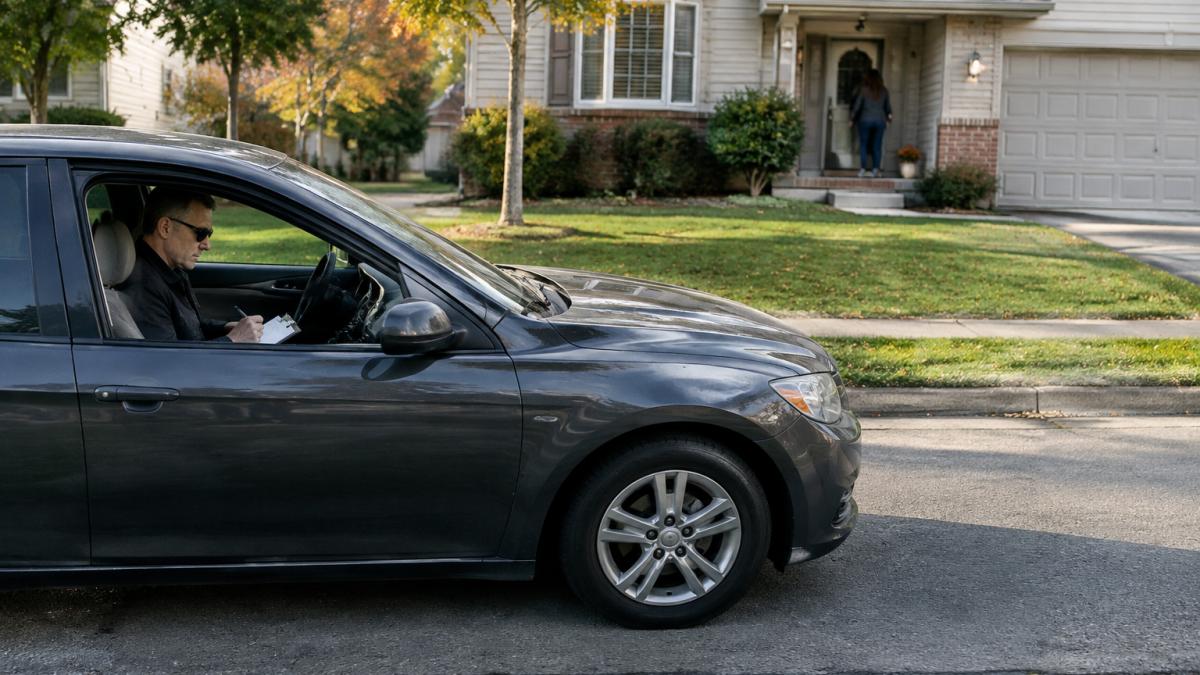
Typical methods used in investigations of this kind include lawful observation from public vantage points, review of public records, and documented case timelines.
Surveillance often produces no reportable activity, and a professional investigator documents that result honestly. What matters is that the documentation is accurate and admissible, which is why ensuring evidence is admissible in court matters as much as the gathering itself.
The Risks of Hiring a Private Investigator for Child Custody
The risks of hiring a private investigator for child custody include wasted money, damaged credibility in court, and legal exposure if an investigator crosses a line. These risks can be reduced with careful selection and clear scoping.
Watch out: hiring an unlicensed investigator who gathers evidence through illegal means can result in that evidence being excluded and damage your credibility with the judge.
Other risks to weigh:
Start a confidential consultation →
- Cost overruns when surveillance has no defined end
- Privacy violations if an investigator goes beyond lawful observation
- Emotional escalation when a parent becomes fixated on catching the other parent rather than protecting the child
- Disclosure risk if the investigation is not handled discreetly
Courts are watching how you behave, not just how the other parent behaves. An investigation that looks like harassment can backfire. The ethical frame is simple: you are documenting conditions for a child's safety, not building a case out of resentment.
Alternatives First: CPS, Law Enforcement, and Your Attorney
Before you spend money, exhaust the free and statutory channels.
Suspected crime: contact law enforcement. Impaired driving with a child present, physical abuse, or drug activity in the home are law enforcement matters.
A custody evaluation. Courts can order a custody or parenting evaluation by a neutral evaluator, and some parents request one.
Your own documentation. A dated log of what you observe, with times, dates, and specifics, costs nothing and can be useful to your attorney.
An investigator complements these channels; it does not replace them.
Watch out: reporting to CPS or calling law enforcement can escalate conflict and may trigger retaliation in the custody exchange.
The decision framework is straightforward. If a child is in immediate danger, call 911. If you suspect neglect, report to CPS.
What Happens After the Evidence Is Collected
After evidence is collected, the investigator compiles it into a documented report with a timeline, exhibits, and a clear statement of what was observed. Your attorney then decides how to use it, whether in a filing, a settlement negotiation, or testimony at a hearing.
The report is not the end of the process. Someone has to explain it to a judge. That is where private investigator testimony in custody hearings becomes the deciding factor, and where expert testimony in family court rules on admissibility and preparation come into play.
A well-prepared investigator can serve as an unbiased witness. That objectivity is the whole point: a neutral third party describing what they saw carries more weight than a parent describing the same thing.
Start a Confidential Consultation Before You Spend a Dollar
The decision to hire an investigator is a spending decision, and it deserves the same scrutiny as any other. Define the question, confirm the legal channel, and get a written scope before money changes hands.
At Special Solutions, Ltd., our licensed investigators have prepared court-ready documentation since 1991, and our leadership serves on the Illinois Private Detective, Private Alarm, Private Security, Fingerprint Vendor and Locksmith Board. We compile findings into reports suitable for legal proceedings, and our investigators are prepared to provide testimony in court.
Before you sign anything, read what a private investigator contract should include so you know how scope, fees, and evidence ownership should be spelled out.
Start a confidential consultation with Special Solutions, Ltd. to find out whether an investigation fits your case before you commit to it.
Frequently Asked Questions
Should I hire a private investigator for suspected child neglect?
Only if a licensed investigator can document specific, observable behavior that a court will accept, and only after you have reported the safety concern to the proper authorities. A private investigator child neglect case works best when there is a clear pattern to record, such as a parent leaving a young child unsupervised or driving impaired with the child in the car. If a child is in immediate danger, call 911 or child protective services first. An investigator documents; they do not rescue.
What can a private investigator legally do in a child neglect investigation?
A licensed investigator can conduct lawful surveillance from public spaces, photograph and video what is visible from public property, verify addresses and employment, review public records, and interview willing witnesses. They cannot trespass, tap phones, access private accounts, or enter a home without consent. Illinois and most states require licensing, and an unlicensed operative's work can be challenged or excluded. Ask for the license number and confirm it with the state before you sign anything.
Can a private investigator interview a child about suspected neglect?
Rarely, and usually they should not. Interviewing a child about abuse or neglect can contaminate a case, and courts and child protective services treat repeated questioning as harmful to the child. Forensic interviews are handled by trained child advocacy center staff, often with law enforcement present. An investigator's role is to document adult behavior and conditions, not to question the child. If you believe a child has been harmed, route that concern to CPS or law enforcement.
How much does a private investigator cost, and are there alternatives?
Rates vary by market, case complexity, and hours required, so ask for a written estimate and retainer terms before work begins. Costs climb fast with multi-day surveillance. Cheaper alternatives include requesting records through your attorney, subpoenaing phone and school records in litigation, asking your attorney to depose the other parent, or filing a motion for a custody evaluation. A court-appointed evaluation is an option to discuss with your attorney.
What are the risks of hiring a private investigator for child custody?
The main risks are wasted money on evidence a judge ignores, privacy or wiretapping violations that backfire in court, and the appearance of harassment if surveillance is poorly handled. Evidence gathered illegally can be excluded, and in some cases the hiring parent faces counterclaims. A judge may also view aggressive surveillance as conflict-driven rather than child-focused. Have your family law attorney review the plan and the investigator's credentials before the first hour is billed.
The hardest part of this decision is separating fear from evidence. If you can name the specific behavior you need documented and your attorney agrees it matters, an investigation can be the difference between an allegation and a record. If you cannot, the honest answer is to wait, report through official channels, and revisit the question when the facts are clearer.